Unlocking Creative Potential with Vintage Watercolor Plants
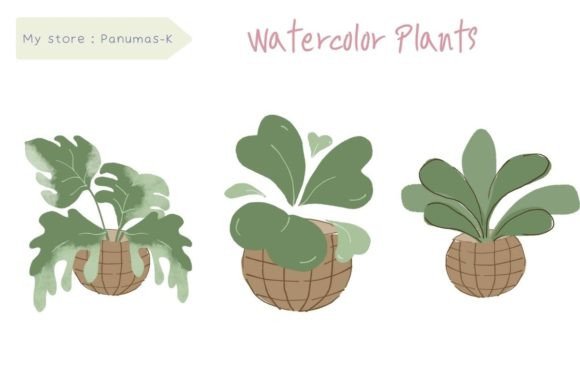
In the ever-evolving landscape of digital design and handmade crafts, there is a enduring appreciation for elements that feel organic, tactile, and timeless. Among these, Watercolor Plants have emerged as a versatile staple for creators ranging from professional graphic designers to hobbyist scrapbookers. The specific appeal of a hand-painted watercolor plants clip art set, particularly one rendered in a vintage pastel color theme, lies in its ability to bridge the gap between traditional artistic warmth and modern digital convenience. This article explores the multifaceted utility of such assets, examining how they can elevate various projects while offering practical guidance on their integration into your workflow.
The Enduring Appeal of Hand-Painted Aesthetics
While vector graphics and flat design have dominated the tech industry for years, there has been a significant resurgence in styles that mimic traditional media. Watercolor Plants offer a softness that rigid geometric shapes often lack. The bleeding edges, subtle color gradients, and textured appearance inherent in watercolor painting evoke a sense of nostalgia and authenticity. When these elements are captured in a vintage pastel color theme, they acquire an additional layer of sophistication. Pastels—soft pinks, muted sage greens, dusty lavenders, and creamy yellows—are inherently calming and visually accessible. They do not demand attention through high contrast but rather invite the viewer in with gentle hues.
For business owners and content creators, understanding this psychological impact is crucial. Using Watercolor Plants in branding or marketing materials can signal approachability, creativity, and a connection to nature. Unlike stock photography, which can sometimes feel generic or overused, a curated clip art set of hand-painted elements offers uniqueness. Even if the set contains a limited number of files, such as the three PNG files of separate elements mentioned in many boutique collections, the artistic quality ensures that each usage feels intentional and bespoke.
Versatility Across Mediums: From Screen to Paper
One of the primary strengths of a high-quality Watercolor Plants collection is its adaptability. The format matters immensely here; receiving assets as PNG files with transparent backgrounds is the industry standard for a reason. This transparency allows the artwork to sit seamlessly atop any background color or texture without unsightly white boxes surrounding the leaves and stems. Let us examine several key areas where these assets shine:
- Card Design and Invitations: Perhaps the most natural home for vintage watercolor botanicals is in stationery. Wedding invitations, baby shower announcements, and birthday cards benefit greatly from the romantic and delicate nature of pastel plants. Designers can layer these elements to create borders, corner accents, or central focal points. The softness of the watercolor complements elegant typography, creating a cohesive look that feels expensive and thoughtful.
- Scrapbooking and Paper Crafts: For those who work in the physical realm, printing these digital assets onto high-quality cardstock opens up a world of possibilities. Scrapbookers use Watercolor Plants to frame photographs, create thematic dividers between journal entries, or embellish handmade journals. Because the color palette is vintage and muted, these prints tend to blend well with aged papers, washi tapes, and other textured craft supplies.
- Web Design and Digital Content: In the digital sphere, heavy textures can sometimes slow down load times or clutter a user interface. However, optimized PNGs of watercolor elements can add a touch of humanity to a website. They are perfect for "About Us" pages, blog post headers, or as subtle background patterns when tiled correctly. For social media managers, these clips are invaluable for creating Instagram stories or Pinterest pins that stand out in a feed saturated with bold, neon graphics.
- Stickers and Product Branding: The rise of print-on-demand services has made it easier than ever to turn digital art into physical products. A set of Watercolor Plants can be easily converted into die-cut stickers, laptop decals, or packaging labels for small businesses selling soaps, candles, or artisanal foods. The vintage pastel theme aligns perfectly with current trends in eco-friendly and organic product branding.
Evaluating the Asset: What to Expect from a Clip Art Set
When acquiring a digital asset like a Watercolor Plants set, it is important to manage expectations regarding the contents and limitations. A typical boutique set might include a zip file containing a specific number of files, such as three PNG files of separate elements. While this may seem modest compared to massive bundles containing hundreds of items, the value often lies in the curation and quality of the individual pieces.
Transparency and Resolution
The utility of these files hinges on their resolution. For print applications like invitations or large-format posters, the PNGs must be high-resolution (typically 300 DPI) to ensure the watercolor texture remains crisp and does not appear pixelated. For web use, lower resolutions are acceptable, but having the high-res original provides flexibility. The transparent background is non-negotiable; it saves the user hours of manual editing in software like Photoshop or GIMP.
Color Consistency
A major advantage of buying a themed set is color harmony. When you download a Watercolor Plants collection defined by a vintage pastel theme, you know that every leaf, flower, and stem will work together visually. You do not need to spend time adjusting hue and saturation to make disparate elements match. This consistency is vital for maintaining a professional look across a multi-page document or a series of social media posts.
Practical Applications and Real-World Scenarios
To truly understand the value of these assets, consider a few specific scenarios where they solve common creative problems.
Scenario 1: The Small Business Owner
Imagine a local bakery specializing in gluten-free treats. They want to rebrand their packaging to reflect a natural, wholesome image but have a limited budget for a custom illustrator. By purchasing a Watercolor Plants set, they can immediately apply soft wheat stalks or lavender sprigs to their box designs. The vintage pastel colors suggest tradition and care, distinguishing them from competitors using bright, artificial-looking graphics. They can use the same elements on their website and menu, creating a unified brand identity without hiring a dedicated artist.
Scenario 2: The Event Planner
An event planner is organizing a spring garden party. They need to create a cohesive suite of materials: save-the-dates, seating charts, and menu cards. Using a clip art set of Watercolor Plants, they can drag and drop elements into their layout software. Because the files are separate elements, they can rotate a fern here, flip a flower there, and overlap stems to create the illusion of a lush, custom bouquet. The pastel theme ensures the printed materials look elegant under various lighting conditions at the venue.
Scenario 3: The Digital Educator
A teacher creating resources for an online classroom wants to make their worksheets visually engaging without being distracting. Bright primary colors can sometimes be overstimulating. Instead, they incorporate Watercolor Plants as decorative borders or bullet points. The soft aesthetic creates a calm learning environment, and the natural subject matter can subtly reinforce lessons about biology or the environment.
Considerations and Limitations
While Watercolor Plants are incredibly useful, they are not a one-size-fits-all solution. It is important to recognize where they might not be the best choice. For instance, if a project requires a hyper-modern, industrial, or high-tech aesthetic, the soft, organic lines of watercolor might clash with the desired vibe. Similarly, if a design needs to be scaled infinitely without any loss of quality (such as for a massive billboard), vector formats (SVG or EPS) are superior to raster PNGs. However, for the vast majority of card design, web, and paper craft applications, the resolution provided in standard PNG sets is more than adequate.
Furthermore, users should be mindful of licensing. Most clip art sets are intended for personal and commercial use, but restrictions often apply regarding reselling the files themselves as digital downloads. Always review the terms included in the zip file to ensure compliance.
Making the Most of Your Download
Once you have downloaded your zip file containing the Watercolor Plants, organization is key. Extract the files to a dedicated folder on your computer. If you use design software frequently, consider importing these PNGs into your asset library or "brushes" panel for quick access. Experiment with blending modes; placing a watercolor element over a textured paper background and setting the blend mode to "Multiply" can enhance the realistic feel of the paint interacting with the paper.
Do not be afraid to manipulate the elements. Just because you received three separate files does not mean you are limited to three images. By rotating, scaling, mirroring, and combining these elements, you can create countless unique compositions. A single fern leaf can become a sweeping border when duplicated and arranged strategically. This modular approach maximizes the value of even a small clip art set.
In conclusion, integrating Watercolor Plants into your creative toolkit offers a pathway to softer, more inviting designs. Whether you are crafting a wedding invitation, designing a website header, or adding flair to a scrapbook page, the vintage pastel aesthetic provides a timeless foundation. By understanding the features, respecting the limitations, and applying these assets with intention, you can elevate your projects from functional to exceptional. The beauty of hand-painted digital assets lies in their ability to bring a human touch to the digital age, reminding us that even in a pixelated world, there is room for the gentle brushstroke.