Mastering Your Online Support Landing Page Strategy
In the fast-paced digital ecosystem, the moment a user encounters a hurdle with your product or service is often the most critical juncture in their customer journey. This is where a well-constructed Online Support Landing Page transitions from a simple informational stopgap into a powerful tool for retention and trust-building. Imagine a scenario where a small business owner is struggling to configure a new software integration late at night. They are not looking for a sales pitch; they are looking for immediate, clear guidance. If they land on a cluttered, confusing page, frustration mounts, and the likelihood of churn increases. However, if they arrive at a dedicated support hub designed with clarity and empathy, the narrative shifts from problem to solution.
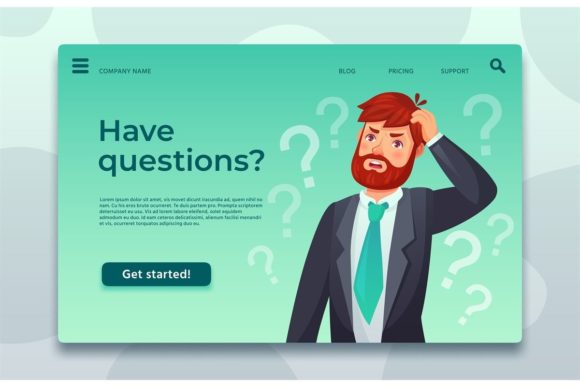
The concept of an Online support landing page goes far beyond merely listing a phone number or an email address. It represents a strategic interface where communication flows efficiently between the provider and the user. At its core, this type of page addresses the fundamental human need for assistance when facing uncertainty. Visualize the classic imagery often associated with these services: a professional setting where a male figure is asking a question, perhaps looking slightly perplexed, while a helpful operator provides guidance. This dynamic illustrates the very essence of what your digital support page must achieve. It must bridge the gap between confusion and clarity, offering a lifeline to users who find it difficult to decide on the next steps in their workflow.
Reducing Decision Fatigue Through Clear Navigation
One of the primary benefits of a specialized support landing page is its ability to simplify complex decision-making processes. When users encounter technical difficulties, their cognitive load is already high. They are trying to solve a problem while managing the stress of potential downtime or lost productivity. A generic homepage forces them to search for help, adding unnecessary friction. In contrast, a targeted support services page acts as a triage center. It categorizes issues logically, allowing users to self-diagnose and find answers rapidly.
Consider a freelance graphic designer who cannot upload a large vector file to a client portal. They do not need to read about company history or view latest blog posts; they need specific instructions on file formats and size limits. By presenting these options prominently—perhaps using icons similar to those found in professional IT assistance illustrations—the page allows the user to bypass irrelevant information. This efficiency saves time and reduces the mental energy required to navigate the site. When you remove the noise, you empower the user to focus entirely on resolving their issue, which significantly improves their overall experience with your brand.
Enhancing Professionalism and Trust
The design and content of your support page send a strong signal about your organization's reliability. A polished, well-organized page suggests that you value your customers enough to invest in their success. This is particularly important for entrepreneurs and marketers who rely on your tools to run their own businesses. If your support infrastructure appears makeshift or outdated, it raises doubts about the stability of your core product.
Think about the visual language often used in this space, such as vector template illustrations depicting an operator hotline. These images are not just decorative; they symbolize availability and human connection. Even if your support is largely automated or ticket-based, conveying a sense of "professional IT assistance" through clean design and reassuring copy can make users feel cared for. It tells them that there is a system in place, staffed by knowledgeable professionals ready to intervene if necessary. This perception of robust support can be the deciding factor for a consumer choosing between two competing SaaS platforms.
Practical Applications for Diverse User Groups
Different segments of your audience will interact with your Online Support Landing Page in unique ways, and understanding these nuances is key to maximizing its effectiveness.
- Small Business Owners: For this group, time is money. They benefit most from quick-access FAQs and troubleshooting guides that allow them to solve common issues without waiting for a response. A section dedicated to "Getting Started" or "Common Pitfalls" can prevent hours of wasted effort.
- Creatives and Designers: Users working with visual assets, such as those editing EPS10 files in Adobe Illustrator, often face specific technical hurdles regarding compatibility and rendering. A support page that offers detailed documentation on file types, separation of elements, and editing protocols demonstrates technical competence and respect for their craft.
- Educators and Publishers: These users often manage large groups or complex distribution lists. They require clear channels for escalation. Knowing exactly how to reach a human operator when a systemic issue arises provides peace of mind and ensures continuity in their operations.
By tailoring sections of your landing page to address these specific personas, you move away from a one-size-fits-all approach. Instead, you create a personalized experience where each visitor feels understood. For instance, including a searchable knowledge base with tags relevant to specific industries can help a marketer find campaign-related tips while a developer finds API documentation, all within the same interface.
Streamlining Communication Channels
A common mistake in support page design is offering too many contact options without clear guidance on when to use each. Should the user call, email, chat, or submit a ticket? Ambiguity here leads to the "male asking question" scenario where the user is stuck, unsure of the best path forward. An effective Online support landing page clarifies these pathways.
For urgent matters, a prominent hotline number or live chat widget is essential. For non-urgent, complex issues that require documentation, a ticketing system is more appropriate. By explicitly stating response times and the best use cases for each channel, you manage expectations effectively. This transparency prevents frustration and ensures that your support team is not overwhelmed by low-priority inquiries via high-priority channels. It creates a structured environment where problems are routed to the right destination immediately, increasing the efficiency of both the user and the support staff.
Limitations and Strategic Considerations
While a dedicated support landing page is invaluable, it is not a panacea for all customer service challenges. It requires maintenance and updates to remain relevant. If your product evolves and your documentation does not, the page becomes a source of misinformation. Furthermore, over-reliance on self-service options can alienate users who genuinely need human interaction. It is crucial to strike a balance between automation and accessibility.
Users should also consider the technical limitations of their chosen platform. For example, if you are providing resources for designers, ensuring that downloadable assets like vector files are compatible with standard editors like Adobe Illustrator is vital. If a user downloads a file expecting to separate elements easily but finds the layers locked or the format incompatible, the support page has failed its purpose. Always test your resources from the perspective of the end-user to ensure they deliver on their promise.
Additionally, cultural and linguistic diversity should be taken into account. A global audience may require multi-language support or culturally neutral imagery to ensure the "helpful operator" vibe resonates across different regions. What works for a domestic audience might not translate well internationally, so customization may be necessary for broader reach.
Moving Forward with Confidence
Ultimately, the goal of your Online Support Landing Page is to turn a moment of vulnerability into an opportunity for connection. When a user lands on this page, they are admitting they need help. How you respond defines your relationship with them. By providing clear, actionable, and empathetic support, you do more than just fix a bug; you reinforce the value of your product and the integrity of your brand.
Whether you are a solo freelancer managing your own client communications or a large enterprise coordinating a massive support team, the principles remain the same. Clarity, speed, and reliability are the currencies of trust in the digital age. Invest time in refining your support interface, curating your resources, and ensuring that every element, from the headline to the contact form, serves the user's immediate needs. In doing so, you transform a potential point of failure into a cornerstone of customer loyalty.